
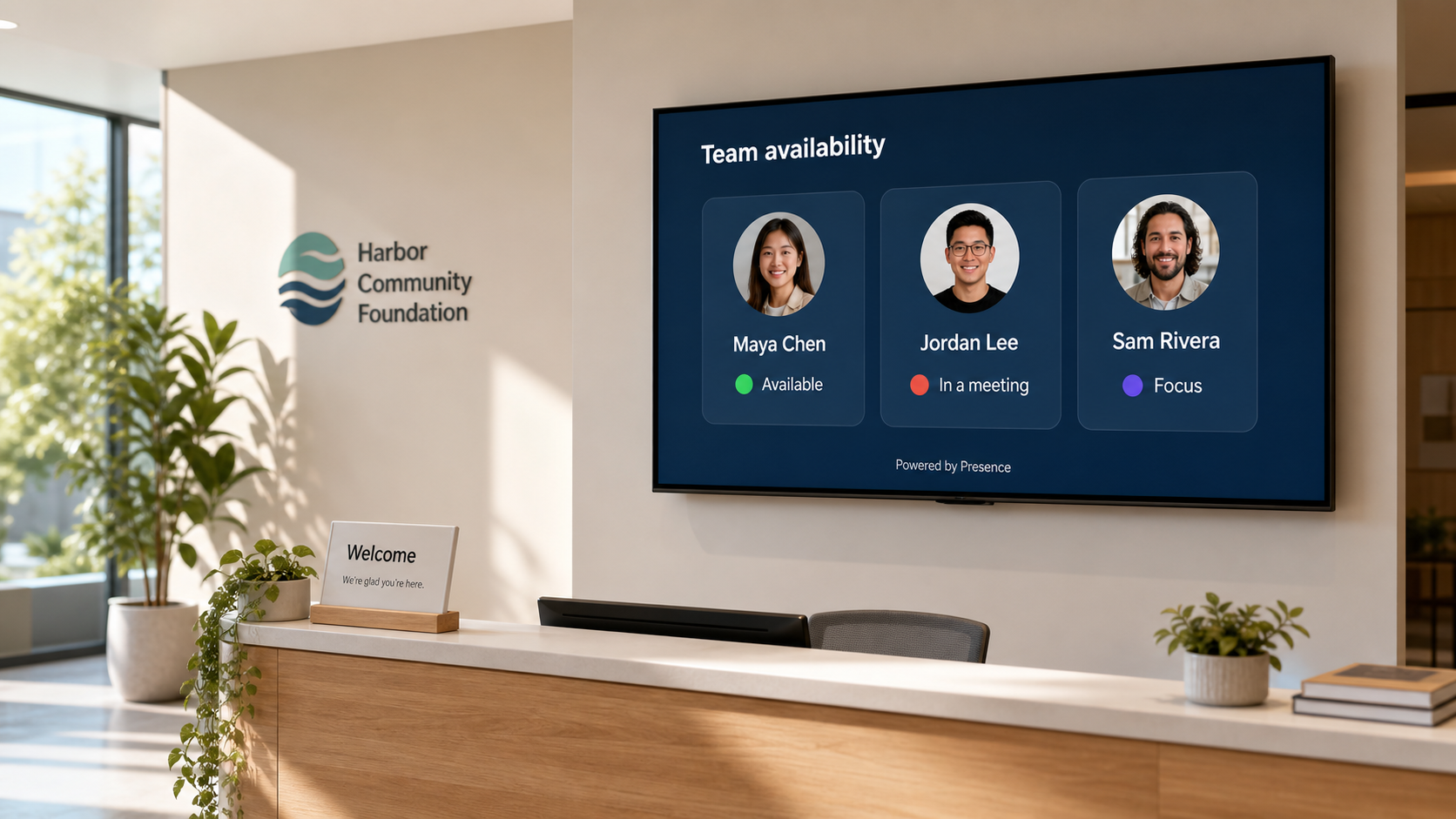
Most teams already have places where people go looking for an answer: the front desk, a staff directory, a hallway screen, or a coworker who somehow knows where everybody is.
The problem is that those places usually know too little or reveal too much. A receptionist may see that a person has a calendar event without knowing whether an interruption is okay. A public staff page may provide an email address but no clue whether a quick conversation makes sense right now.
Presence is built around a smaller question: Is now a good time?
A reception screen that does not become a surveillance screen
Team View gives participating people one clear card with a simplified status, their department or role, an optional broad workplace, and a helpful return time when one is available. It can sit on a reception computer or a shared TV where staff already look.
What it does not become is just as important. It is not a productivity score, an attendance clock, or a feed of private activity. A visitor does not need to know the title of a meeting, who is on a call, what is being recorded, or where someone is sitting.
The same idea can live on a normal staff page
A church, school, or nonprofit should not have to replace its website to make a staff directory more useful. Presence can add a small live badge to the staff cards already there.
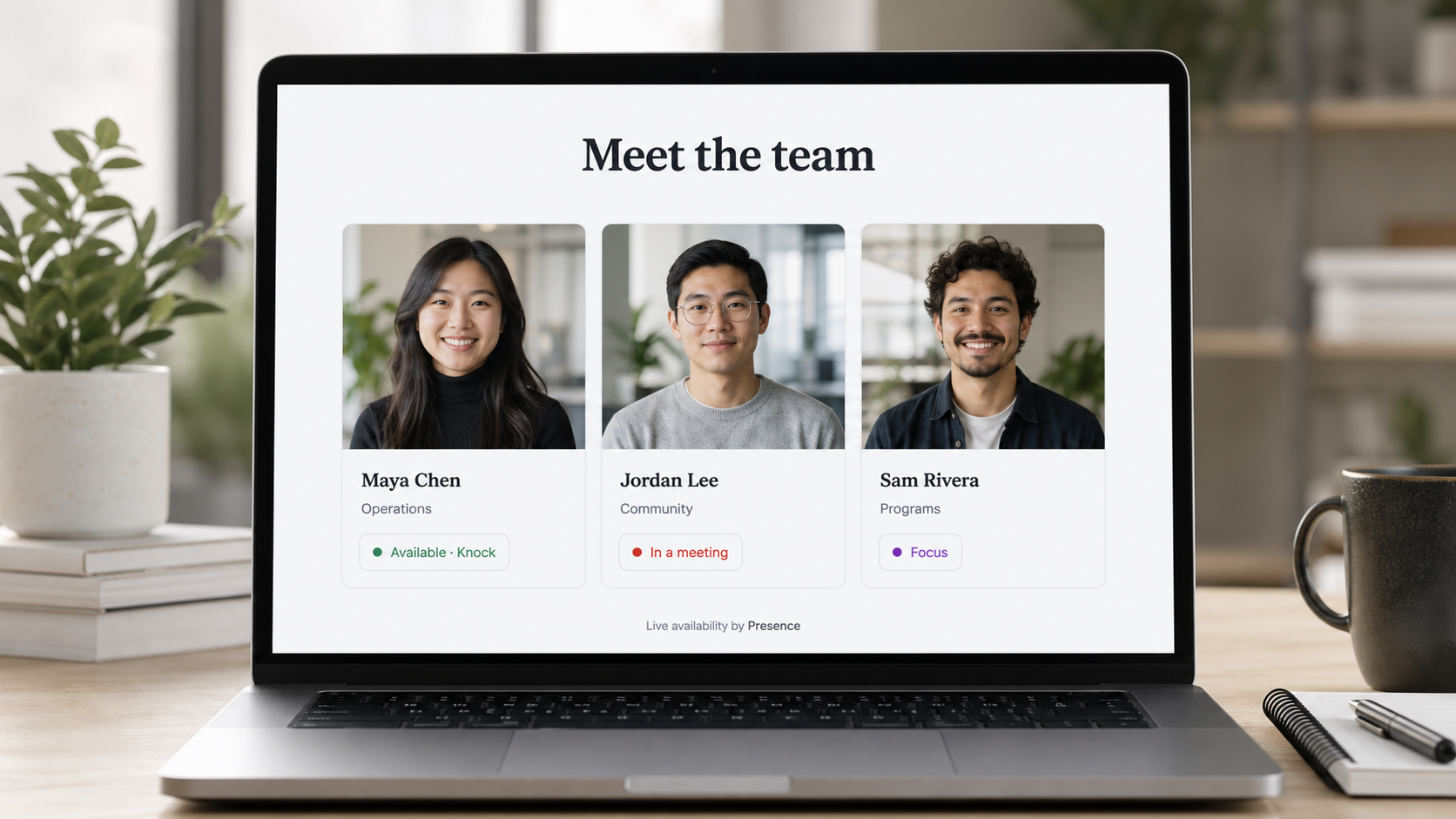
Each person opts in. The organization uses a separate public embed token instead of exposing its private Reception View. The public version is deliberately more limited: a simplified availability label and, when the person allows it, a short Digital Knock action.
That means a visitor can ask for a conversation without receiving a calendar, an exact location, or a detailed activity trail. Digital Knock is available only when the person's status allows it, and the request is intentionally small: a name, a respectful knock, and a choice on the other side.
One status, two very different audiences
The reception board is for trusted coworkers who need to coordinate the day. The staff-page badge is for a wider audience and therefore shares less. They are different views with different boundaries, but they come from the same final Presence answer.
The goal is not to make people more visible. It is to make availability clearer.
I like this direction because it meets teams where they already are. No new screen is required. No one has to learn how to read somebody else's calendar. Presence can quietly make the front desk, the hallway TV, and the staff page a little more helpful—and leave the private details where they belong.