I have been reaching out to display makers with a fairly unusual request: let me test your hardware with a product that is still being built.
I am not a giant company placing a huge order. I am one person building Presence in public, learning from early users, and trying to understand which screens, lights, and signs can make a privacy-safe status genuinely useful outside an office door.
Some of the replies have been extraordinarily kind.
Someone on the other side said yes
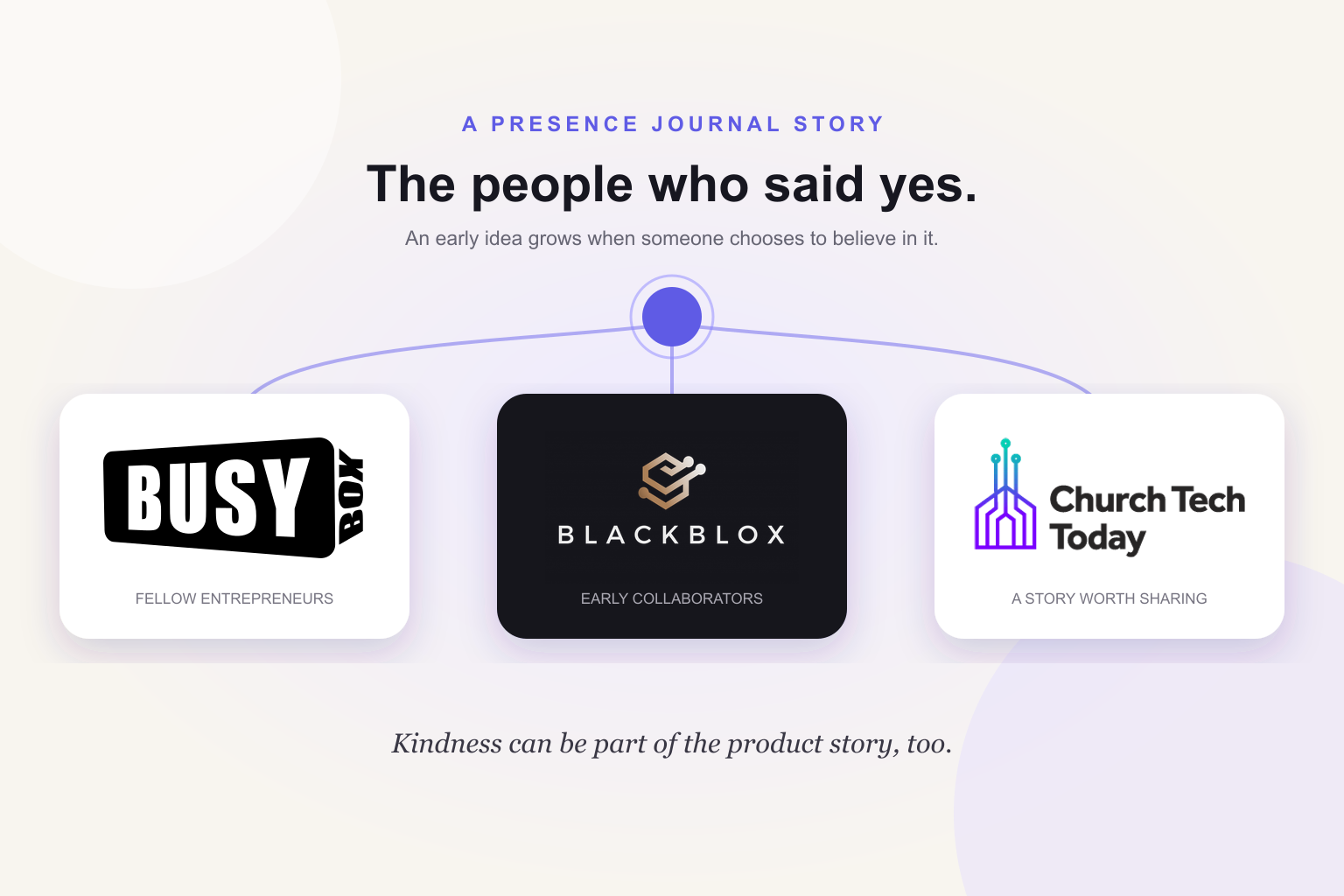
The BusyBox team wrote, “We love our fellow entrepreneurs AND Busy people.” Then they told me Steve Skillings—the company’s CEO, co-founder, and inventor—had said, “Let’s support him,” and asked where they could send a unit. They helped me choose a BusyBox D for its custom-message possibilities and talked through how I could put it to work with Presence. That is an unusually thoughtful response to a cold email from a stranger with a very young product.
Then Tomaž Repar, Patrik Peternel, and the BLACKBLOX team did something equally generous. After looking at Presence, they offered to prepare an early evaluation setup and have their developer create a first Presence-oriented sample so I would not have to begin with a blank project.
They did not simply help me access hardware. They started thinking alongside me about status messages, visible signals, local controls, secure updates, and what a dedicated Presence experience could become. Every one of those decisions saves a young product from building only from specifications and screenshots.
They are not just helping me test displays. They are giving an early idea room to prove itself.
Kenny opened a different kind of door
Not every act of support arrived as hardware. I sent Kenny Jahng at ChurchTechToday a note about the seven-year-old outside my office door and the ways Presence might help church teams. He could easily have ignored a pitch from a product that was only a few weeks old.
Instead, Kenny saw the human story inside it and invited me to do a Q&A. He created ten thoughtful questions, asked me to answer like I actually talk, and gave me space to explain the idea, the privacy choices, and why churches and nonprofits matter to me.
That invitation did something a device cannot do: it told me the story was worth hearing. For an early founder, someone offering a real audience can be every bit as meaningful as someone offering a real piece of hardware to test.
Real hardware tells the truth
A product page can tell me resolution, battery life, dimensions, and whether an API exists. It cannot tell me how a display feels at the end of a hallway, whether a message is readable while someone is walking past, or whether setup is simple enough for a church office, small business, school, nonprofit, studio, or home office.
Testing a real unit lets me find the awkward parts before I recommend anything to another person. It also creates opportunities for integrations I would never discover from a browser tab alone.
A little generosity changes the energy
Building something new can feel lonely. Most days are code, bugs, forms, approvals, support messages, and another item added to the list. Then a stranger at another company decides the idea is worth encouraging.
That encouragement matters. I am grateful to the people who have answered emails, offered advice, opened developer access, or trusted me with something they built.
I hope Presence grows into a product that returns that kindness—by supporting their hardware thoughtfully, telling the truth about what I learn, and helping more people know when it is okay to interrupt.