
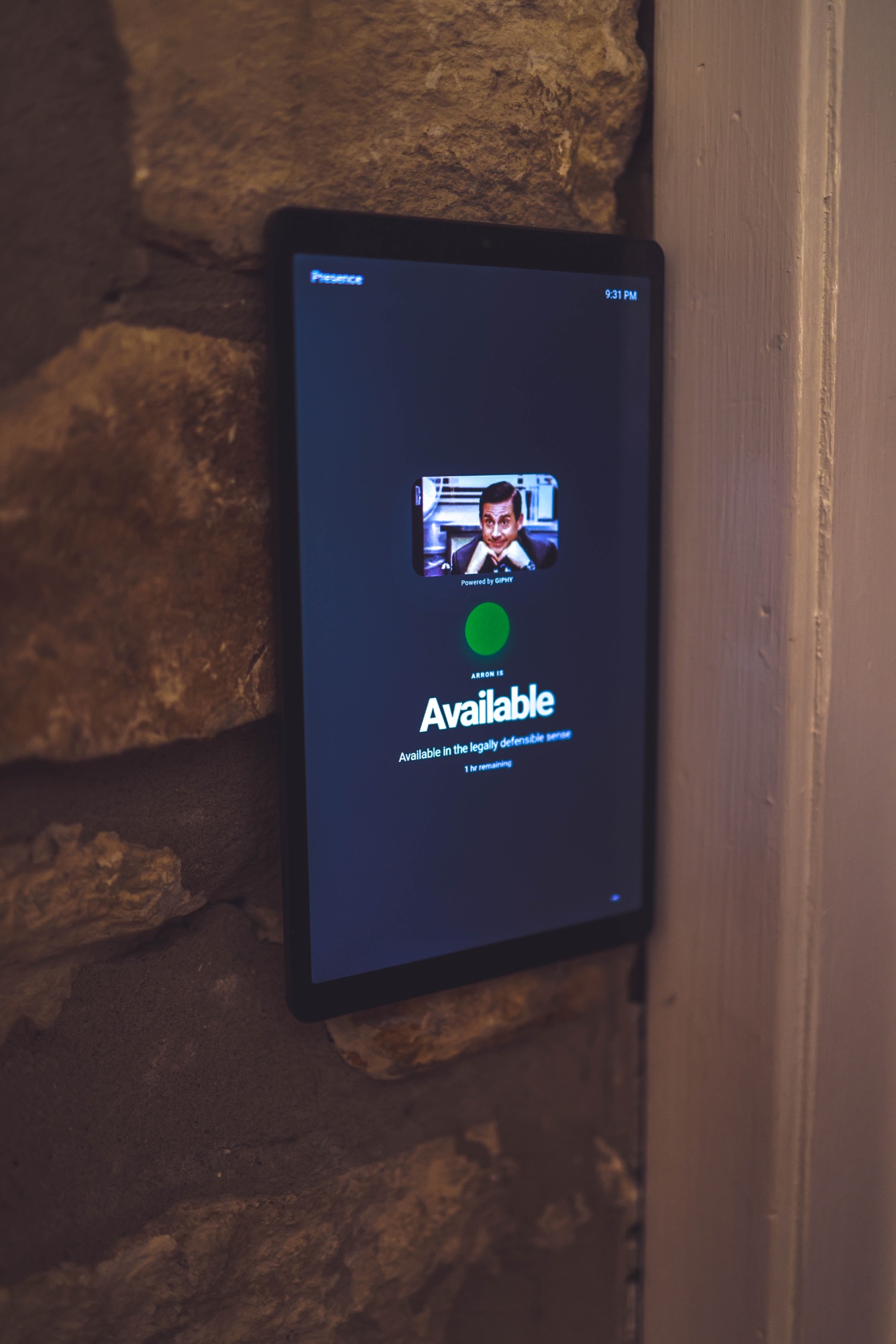
Both approaches can stop interruptions. The useful question is whether you need a fixed instruction or a status that follows calendars, calls, meetings, and manual choices.
Use a door sign when the rule rarely changes
A printed or sliding sign is inexpensive, requires no account, and never loses Wi-Fi. For a room that is nearly always open or nearly always private, that may be the best answer.
The tradeoff is that someone has to remember to change it, and it cannot tell people when the person becomes available again.
Use a digital display when availability changes
A calendar-connected display can change as the workday changes. Presence can show a clear status, message, color, broad place label, or expected return while keeping the private event behind it hidden.
A browser or existing tablet is usually the easiest starting point. Dedicated lights and displays are optional outputs for rooms that need a more visible signal.
Start with the simplest version that works
Do not buy hardware before proving the behavior. Run Presence in a browser, test it through a real workday, and learn which signals matter in the room.
If people still miss the status, move it to a tablet or dedicated display. If a static sign solves the problem, keep the sign.